From Top 8 to TikTok: What Myspace Taught Us About Social Media Marketing (Before We Knew What Social Media Was)
Simply click and drag your
cursor over a passage of
text from the article below
to tweet or share.
Author: Lucy Hunter, Social Media Coordinator at UMM
So here’s the drama. It’s 2015, and Snapchat just introduced “Best Friends”, a feature that publicly displays the top three people you talk to the most.
This was catastrophic news.
@juliacarolann we were all personally victimized by this feature at one point 🥴#StudentSectionSauce #snapchat #nostalgia #2010s #juliacarolan #2015 #throwback ♬ Monkeys Spinning Monkeys – Kevin MacLeod & Kevin The Monkey
Suddenly, everyone knew everyone’s business. Why was Jamie your number one best friend? I didn’t realise Lily and Tom were so close. These were the kinds of questions keeping 14-year-old Lucy awake at night.
At the time, I thought Snapchat had invented friendship fallouts. Turns out, they were simply recycling an idea from a social media platform that came long before my time.
Myspace.
As a Gen Zer, Myspace always felt like ancient internet history. I never used it, never understood the obsession and honestly didn’t care what my older cousins got up to online.
But the more I’ve looked into it, the more I’ve come to a surprising conclusion.
Myspace might have been peak social media, back when social media was actually about being social and building genuine communities (which is the absolute key to social media marketing success—more on that here).
@sincerelyjerry If you’re lucky I’ll put you in my top 8 #2000s #emo #emophase #myspace #myspacekid ♬ original sound – Jerry
We All Have A Little Bit Of Myspace In Us
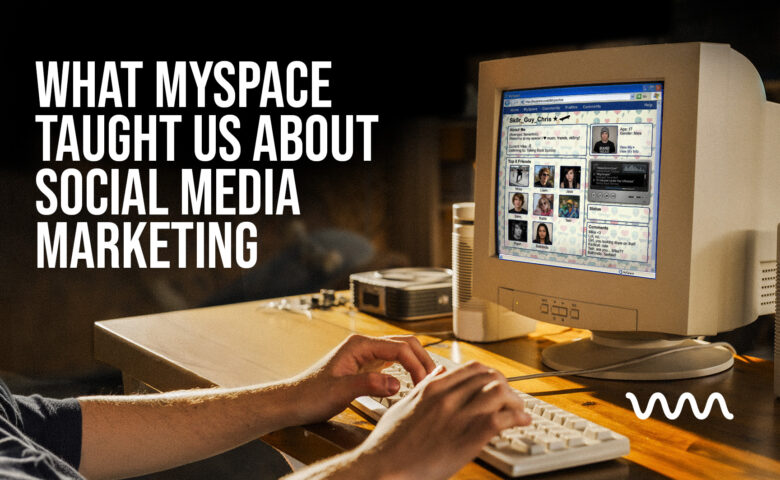
For a quick rundown, Myspace was like your very own digital bedroom. It’s a mash-up of TikTok, Instagram, Spotify, Tumblr and LinkedIn all merged into one gloriously chaotic platform.
@older.brother.core MySpace in 2006 🖥️🖱️📸 #nostalgia #2000s #fyp #myspace #teen ♬ MakeDamnSure – Taking Back Sunday
Users could customise their profiles with music, colours, graphics and even custom code to show the internet exactly who they were. In doing so, an entire generation accidentally became part-time coders.
@codyume this can’t be the same brain i had when i taught myself html coding #html #90skids #00skids #myspace #coding ♬ Butterfly – SMiLE.dk
But the feature that really kept everyone awake at night was the Top 8.
The only thing Gen Zs and Millennials can relate to is the same friendship politics. Users could publicly rank their eight closest friends on their profile, turning friendships into tumultuous relationships. Getting promoted was a social victory. Getting removed? We’ll just leave that there.
And then there was Tom.
View this post on Instagram
Every Myspace user automatically received their first friend: co-founder Tom Anderson. His smiling profile picture became one of the most recognisable images of the early internet. However, Tom didn’t stick around to see his work become obsolete when Facebook took over. News Corp acquired Myspace in 2005 for $580 million, and Tom stepped away, achieving something far rarer: he logged off.
The Birth of the Social Media Business Model
For any modern social media agency, Myspace offers a fascinating look at the foundations of social media marketing and the advertising models that still power today’s platforms.
With more than 110 million users at its peak, Myspace’s numbers weren’t something brands could just ignore, and in 2006, Google signed a three-year, $900 million agreement to become Myspace’s exclusive advertising partner.
Unlike today’s polished influencer campaigns, brands on Myspace were largely experimenting in real time.
Companies created profiles, partnered with musicians and began testing highly targeted advertising. Major advertisers, including Toyota and McDonald’s, were among the first brands to use Myspace’s “HyperTargeting” system, which delivered ads to specific audience groups based on profile information and interests.
The platform operated entirely on advertising revenue and collected user behaviour data to personalise the ads users saw. Nearly two decades later, social marketing agencies use targeted advertising as the primary revenue driver for most social media platforms.
The Original Content Creators
Long before influencers were attending brand trips and posting #ad disclosures, there was a new kind of celebrity, the “Myspace celebrity”. They were ordinary people who built massive online audiences simply because people found them interesting.
Figures we know still to this day, like Jeffree Star, used the platform to build loyal followings, while artists such as Lily Allen leveraged Myspace to launch their music careers. The platform proved something that remains true today: social media can transform everyday people into household names. For many users, Myspace wasn’t just a social network, it was where they discovered new music, creators and internet personalities long before social media became the search engine it is today (for more on how Gen Z use social as a search engine, click here.)
@officialnancydrew Replying to @Indya no series about people becoming famous from being online in the early years would be complete without discussing lily allen. lily allen came to her fame from posting her music on her myspace profile, which was a very different way of becoming famous at this time. she not only shared her music, but her unique sense of style and was an icon for both her art and her clothing choices. since this is simply an intro to lily and her music and style, what else do you have to add? lmk in the comments! #lilyallen #myspacedays #fashionhistory ♬ original sound – officialnancydrew on substack
The only difference is that today’s influencers have content strategies, social media management teams and an entire creator economy to guide them. Myspace celebrities had none of that. They were, quite literally, the first generation to navigate internet fame in real time.
Myspace Legacy
While Myspace may no longer dominate our screens, its fingerprints are everywhere.
The platform pioneered many of the behaviours that define social media today, from personal branding and influencer culture to curated profiles, music-driven identities, and even publicly displaying friendships.
Snapchat’s Best Friends feature echoed the Top 8; Instagram feeds have become the modern version of customised profiles, and LinkedIn profiles mirror Myspace’s early “About Me” culture.
@davvn.music even the most cryptic emo lyrics can’t fix the pain of getting dropped from the top 8… 🫣💔 “care less” – davvn out NOW!! #myspace #myspacedays #nostalgia #2000s #y2k #rawring20s #scene #scenekid #scenequeen #emo #rawr #emoaesthetic ♬ care less. by davvn – davvn.music
My personal favourite social media copycat was Tumblr.
Like Myspace, Tumblr let users customise their pages / spill their guts out online, and for many of us Gen Zers, it was our first taste of curating an online identity and connecting with our peers. Following the advice of my much cooler older sister, I created my website URL SunflowerChuckTaylors.tumblr.com, and I stand by my 12-year-old self’s choice.
The platforms may have changed, but the urge to tell strangers exactly who we are through a carefully curated online presence remains undefeated. We’ve simply traded glitter backgrounds and Tumblr URLs for Instagram grids and LinkedIn headlines.
Beyond the Top 8
It’s easy to look back at Myspace and laugh at the cringe graphics, profile songs and Tom.
But beneath all of that was something that social media platforms, creators and brands are still chasing today: connection.
Myspace succeeded because it gave people a space to express individualism, discover communities and feel part of something bigger than inside the four walls of their bedroom.
The technology has evolved. There was Myspace, then Facebook (read more about our thoughts on Facebook in 2026 here), and so on. The algorithms have become more sophisticated, and the creator economy has exploded, but the underlying reason people use social media remains remarkably similar.
They want to connect. For social media agencies and marketers, that’s perhaps the biggest lesson Myspace left behind.
The platforms may change, but people don’t, and if you want to cultivate meaningful connections that drive social media and influencer growth, we can certainly help with that.