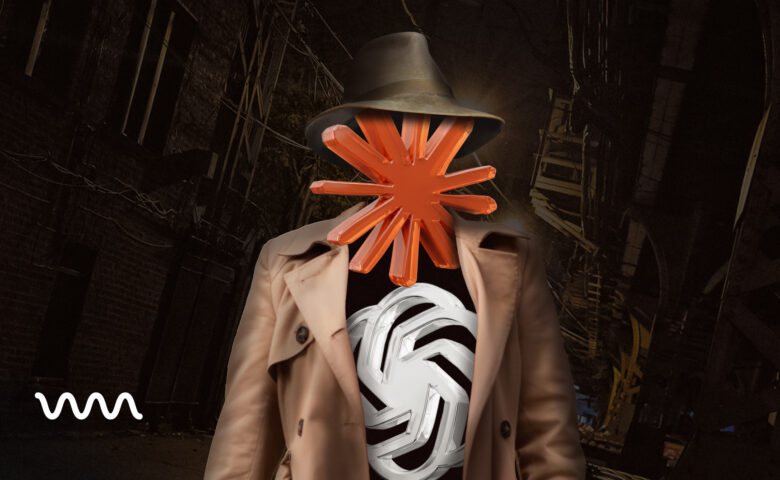
Human-Written, or Three Computers in a Trench Coat? Trusting PR Content in the AI Age
Simply click and drag your
cursor over a passage of
text from the article below
to tweet or share.
Author: Ed Owen, PR Account Director at UMM
A story was doing the rounds the other month that stuck with me. It was one of those times when you suspected something was the case, but you’d rather not be told. Like when you dropped your phone in water, and you’re holding out hope that burying it in rice will bring it back.
Back to the story, and it’s our old friend AI again. Earlier in August, a study landed in the journal Judgement and Decision Making that confirmed something many people already thought. Researchers put six short stories in front of a large group of adults – some written by AI, others by flesh-and-blood people. Crucially, the participants weren’t always told the truth about who wrote what.
View this post on Instagram
You know where this is going. When the verdicts came in, participants found the human-written stories to be more absorbing, more engaging, and of higher quality. But of course, these highest-rated stories weren’t actually written by people, but by machines. The participants were lied to.
Galling, isn’t it? Enough to make you chuck your new phone in the water, all over again? Well, hold on. No need to wind back that throwing arm. It just depends on how you look at the study, and it’s worth exploring in further detail.
Why Humans Still Win
In two words, sentimental favouritism. That sounds bad, and it’s a mouthful to read. But stick with me. It’s the fact the participants gave higher ratings to stories they were told were written by humans.
You can argue that it’s the other side of the bias coin, that just as people shoot down machine-written stories, they promote ones they know came from the human pen. But that’s kind of, sort of, absolutely and most definitely the point.
View this post on Instagram
What it shows is that quality – in the most objective, antiseptic, and removed-from-context sense of the word – isn’t really the point in writing these days. Yes, there’s a cut-off point, and a benchmark for quality. You can’t write a poem using potato prints, although I’d love to see someone try. But what really mattered was the connection, from writer to reader. The participants felt there wasn’t a ghost at the wheel – that somebody was driving the machine, they meant what they wrote, and the audience responded to that.
Which brings me, via the most scenic of routes, to the humble press release.
Something Beyond Words
Maybe AI could churn you out a well-written press release. At this point, it likely could – it’s pretty capable. Claude gave me some solid Father’s Day recommendations the other month, it’s not getting foxed by speech marks. I bought him a hat, in case you’re wondering.
But going beyond how to hit that sweet spot in content writing, where something is well-written while being of interest to journalists and readers – a needle I’ve written about threading before – there’s a more fundamental concern at play. Namely, readers are human. Editors are human. Writers, until very recently, were human. And when you get down to its foundation, public relations is a person-to-person business.
@building_out_loud What a rush #ai #claude #cowork #meme ♬ original sound – The Spiral King
Any content you send has a level of trust baked into it. The reader trusts that what you wrote came from an actual person – someone with opinions, a job title and a coffee order. Someone who likely has strident views on cats over dogs, or why on earth you’d watch rugby league over rugby union. I still don’t understand that last one, and I’m aware I live in Sydney.
Bring AI into this, and the whole edifice starts to crack. Authenticity isn’t really optional in good PR – it’s the bedrock of your relationship with a journalist. After all, if a newsdesk can’t trust whether you’re a person or three computers in a trench coat, they’re not going to stick around to try. They’re busy people, and it’s much easier to just put you on the blacklist. AI slop is a huge issue in journalism, and it starts when we let the machine drive the car on ideation.
A Tool, Not a Substitute
This isn’t to say that we should throw AI out entirely. It absolutely has its uses, whether as a research tool or something to bounce ideas off. It’s tireless, uncomplaining and can be very valuable in helping you decide on the best approach. Let it take on that burden.
But there’s a difference between a tool and a substitute, a sparring partner and an author. Even if AI can churn out a cracking short story – and as the journal Judgement and Decision Making has proven, it absolutely can – there’s more to writing a press release than deciding the order the words go in. Both practically and politically, there’s a lot underneath the written content when it ends up on the editor’s digital desk. Twang their inauthenticity alarm, and you won’t be trusted next time.
At UMM, we’re proud to keep doing PR the human way – people-led, putting in the hard yards developing content hand-in-hand with clients. We’re in constant communication with journalists about what they feel would work for their audience, knowing that when coverage does land, it’s because people put it there. If you want to know how that looks from the inside, come have a chat with us.